
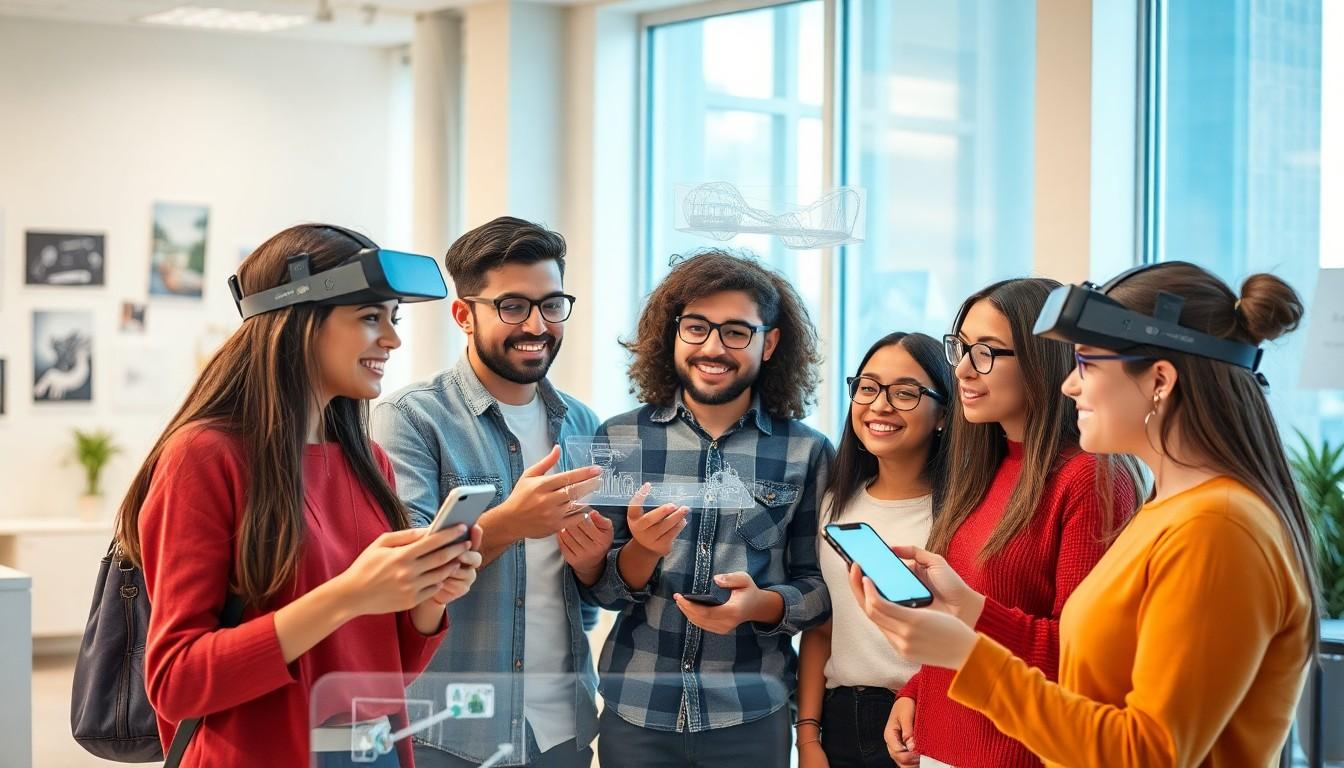
Imagine stepping into a world where your ideas leap off the page and dance around you. That’s the magic of an AR scenario tool. It’s not just a fancy gadget; it’s the gateway to transforming mundane concepts into vibrant, interactive experiences. Whether you’re designing a training program or crafting an engaging marketing campaign, this tool can turn your visions into reality—without requiring a wizard’s wand.
In a world where attention spans are shorter than a cat video, capturing your audience’s imagination is crucial. An AR scenario tool does just that, blending creativity with technology to create unforgettable moments. Get ready to elevate your projects and leave your competitors scratching their heads, wondering how you pulled it off. Let’s dive into the exciting world of augmented reality and discover how this innovative tool can revolutionize the way we communicate and create.
Table of Contents
ToggleOverview of AR Scenario Tool
An Augmented Reality (AR) scenario tool provides immersive experiences that blend digital content with the physical world. This technology utilizes smartphones, tablets, or AR glasses to overlay computer-generated visuals onto real environments, enhancing user interaction. Engaging audiences becomes simpler, whether in training sessions or marketing strategies.
Businesses leverage AR scenario tools to create dynamic training simulations. These simulations allow users to encounter realistic scenarios, enhancing skill acquisition and retention. For instance, an organization can develop an interactive training module that places employees in lifelike emergency situations, enhancing decision-making skills.
Marketing campaigns also benefit from this innovative technology. Brands utilize AR to develop engaging advertisements. By enabling potential customers to visualize products in their own environments, companies can significantly boost conversion rates. Research indicates that campaigns incorporating AR yield a 70% higher engagement rate compared to traditional advertising methods.
Educational institutions embrace AR scenario tools to increase student engagement. Interactive lessons help learners absorb information more effectively. For instance, a history class might present historical events through immersive AR experiences, creating a memorable learning environment.
User-generated content can elevate the AR experience. Individuals can create and share their AR scenarios, fostering community engagement. Such collaborations not only enhance creativity but also extend the reach of AR applications.
Overall, AR scenario tools stand at the forefront of technological innovation. They fundamentally change how people interact with content, enhancing engagement and transforming traditional methodologies across various fields.
Features of AR Scenario Tool
AR scenario tools offer unique features that enhance user engagement and creativity. These functionalities cater to diverse applications in training, marketing, and education.
User Interface and Experience
The user interface of AR scenario tools prioritizes simplicity and intuitiveness. Navigating through interactive elements feels seamless and encourages user exploration. Users enjoy engaging with 3D models and animations that bring content to life. Visual cues and guided tours often enhance learning and discovery, making experiences enjoyable. Overall, an effective user interface ensures users focus on the content, not the technology.
Customization Options
Customization options enable users to tailor AR experiences to meet specific needs. Users can modify visuals, sounds, and interactive elements to align with branding or educational goals. Diverse templates and modules provide starting points, allowing for quick adjustments. Personalized experiences resonate more with users and enhance participation. Additionally, this flexibility supports continuous improvement, as users can adapt scenarios based on feedback or changing objectives.
Benefits of Using AR Scenario Tool
AR scenario tools provide significant advantages for businesses, educators, and marketers by enhancing interactions and improving results.
Enhanced Engagement
Engagement levels soar with AR tools, capturing user attention through immersive experiences. Users interact directly with realistic content, creating memorable moments. For instance, retailers offering virtual try-ons enable customers to see products in a real-world context, boosting interest. Events can become more memorable when attendees explore interactive displays, fostering connections. Additionally, the ability to customize experiences keeps audiences captivated, as brands can tailor content to match target demographics. Enhanced engagement drives better communication and ultimately results in more effective messaging.
Improved Learning Outcomes
Learning outcomes improve substantially when using AR scenario tools in educational settings. Students engage with 3D models, allowing them to visualize complex topics. This interactive approach not only reinforces understanding but also aids retention, as practical experiences create lasting impressions. Research shows that learners retain up to 80% of information when applying concepts in real-time situations. Moreover, educators can adapt scenarios based on student feedback, ensuring the material meets diverse needs. Overall, adopting AR fosters an environment of active participation, resulting in deeper comprehension and superior academic performance.
Applications of AR Scenario Tool
AR scenario tools demonstrate versatility across numerous fields, enhancing interaction and engagement. These innovative tools cater to a variety of applications, including educational use cases and corporate training.
Educational Use Cases
AR transforms educational environments, making learning more dynamic. Enhanced engagement results from interactive lessons that visually illustrate complex concepts. Students experience topics firsthand through 3D models, boosting comprehension significantly. For instance, medical students can explore human anatomy in a virtual environment, fostering deeper understanding. Research shows that learners see up to 80% retention when concepts are applied through AR. Personalized AR experiences also address diverse learning styles, accommodating individual preferences. In this way, educational institutions can leverage AR to create impactful and memorable learning experiences.
Corporate Training Applications
In corporate settings, AR tools enhance training efficiency and effectiveness. Employees participate in realistic simulations that mimic real-world challenges, which builds confidence and competence. Engaging scenarios allow trainees to practice essential skills without the risk of error. For example, AR can simulate complex machinery operations, ideal for safety and operational training. Organizations also enjoy customizable content, enabling training programs to reflect specific corporate objectives. Enhanced feedback mechanisms ensure continuous improvement, allowing organizations to adapt training strategies effectively. This focus on immersive learning translates to higher retention rates and better performance outcomes within the workplace.
The AR scenario tool stands out as a transformative resource across various sectors. Its ability to merge digital content with the physical world creates engaging experiences that captivate audiences. Businesses can harness this technology to enhance training and marketing efforts, fostering deeper connections with users.
As AR continues to evolve, its impact on education and corporate training becomes increasingly significant. By providing immersive and interactive learning opportunities, AR tools not only improve comprehension but also promote active participation. This technology is paving the way for a future where communication and creativity thrive, making it an essential asset for anyone looking to innovate in their field.


