
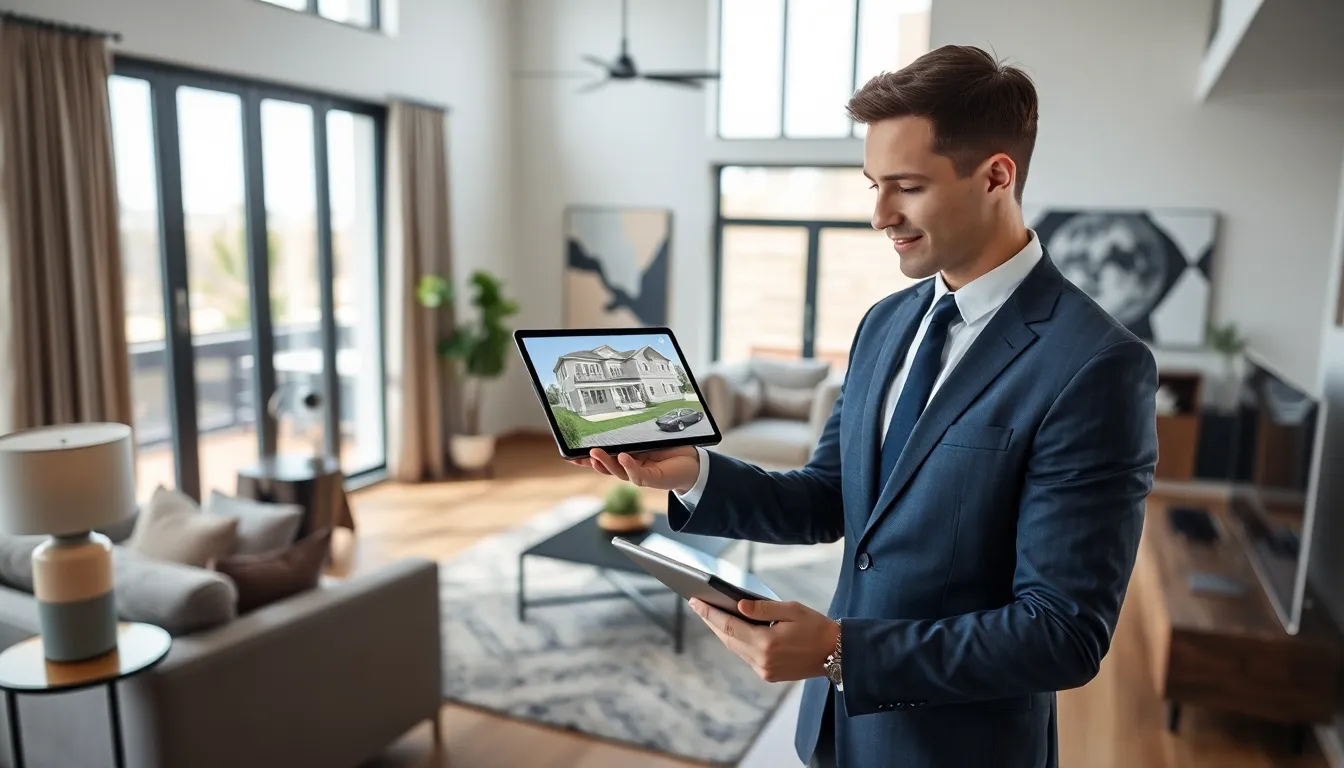
Augmented reality (AR) is transforming the real estate landscape, offering innovative ways for buyers and sellers to interact with properties. By overlaying digital information onto the physical world, AR enhances property viewing experiences, allowing potential buyers to visualize homes like never before.
Imagine walking through a vacant space and instantly seeing how furniture fits or how a room could be redesigned. This technology not only saves time but also elevates the decision-making process, making it easier for clients to envision their future homes. As the real estate market continues to evolve, embracing AR could become a game-changer for agents and clients alike, bridging the gap between imagination and reality.
Table of Contents
ToggleOverview of Augmented Reality in Real Estate
Augmented reality (AR) reshapes the real estate landscape through immersive technology. It allows users to overlay digital content onto the physical environment, enriching the property exploration experience. Potential buyers enjoy the ability to visualize furniture placement or redesign spaces before making a purchase decision.
AR applications in real estate include virtual tours, interactive floor plans, and 3D visualizations. These tools empower agents to showcase listings effectively and uniquely engage clients. Statistics indicate that properties with AR features attract 30% more interest from prospective buyers, illustrating AR’s potential impact.
Leading real estate companies leverage AR technologies to enhance marketing strategies. By integrating AR features, firms create memorable experiences that differentiate their listings. For instance, buyers can use AR apps to view properties remotely, interactively explore each room, and even see different design options.
The benefits of AR extend beyond visualization. AR data analytics help agents understand buyer preferences, allowing for more targeted marketing efforts. As AR continues to evolve, its role in real estate becomes increasingly significant, fostering better connections between sellers and buyers.
Benefits of Using Augmented Reality
Augmented reality (AR) offers several advantages in the real estate sector, enhancing the overall experience for buyers and sellers. Notably, AR transforms how individuals interact with properties, making property exploration more dynamic and engaging.
Enhanced Property Visualization
AR technology enables buyers to visualize properties in a more immersive way. With 3D models and digital overlays, clients can see how furniture and décor would look in a space. This visualization assists buyers in understanding property layouts and design concepts, making it easier to picture their future homes. Statistics show that listings featuring AR experiences sell 20% faster than traditional listings, as buyers can grasp the potential of spaces with greater clarity.
Improved Buyer Engagement
AR significantly boosts buyer engagement by offering interactive experiences. Virtual tours allow clients to explore properties at their convenience, eliminating geographical barriers. Engaging features like allowing users to customize design elements in real-time foster a deeper connection. This interactive approach leads to a 40% increase in buyer retention, as clients are likelier to remember and share their positive experiences. As real estate firms adopt AR, they create unique marketing strategies, enhancing engagement and fostering long-term client relationships.
Applications of Augmented Reality in Real Estate
Augmented reality (AR) finds numerous applications in the real estate sector, enhancing how properties are marketed and experienced. It provides tools that transform traditional processes into engaging, interactive experiences for buyers and agents alike.
Virtual Property Tours
Virtual property tours leverage AR technology to offer immersive viewing experiences without the need for physical travel. Buyers can explore properties in 360 degrees, interacting with spaces as if they were present. Statistics reveal that listings incorporating virtual tours see a 40% increase in engagement, as potential buyers can navigate at their own pace. High-quality imagery and real-time interactions make these tours stand out, allowing users to visualize room dimensions and features comprehensively.
Interior Design Visualizations
Interior design visualizations capitalize on AR to help buyers envision potential changes to properties. Users can overlay digital elements onto physical spaces, evaluating various paint colors, furniture layouts, and decors instantly. This interactive feature aids buyers in making informed decisions, with research showing that properties showcasing design visualizations sell 30% faster. As clients experiment with customization tools and see immediate results, their overall satisfaction and connection with the property increase significantly.
Challenges and Limitations
Despite the transformative potential of augmented reality (AR) in real estate, several challenges and limitations hinder its widespread adoption. Key issues include technical barriers and user acceptance.
Technical Barriers
Technical barriers often restrict the seamless integration of AR into real estate applications. Limited access to high-speed internet affects user experience, as AR relies on real-time data transfer for optimal performance. Compatibility issues with various devices, such as smartphones and tablets, can limit functionality, leaving some users unable to access AR features. Additionally, developing AR applications requires investment in specialized software and hardware, which may deter smaller firms from embracing this technology.
User Acceptance
User acceptance poses another critical challenge for the adoption of AR in real estate. Some potential buyers may be hesitant to engage with AR due to unfamiliarity with the technology, leading to a lack of trust in its accuracy. Furthermore, the learning curve associated with using AR applications can discourage users from fully exploring their capabilities. Real estate professionals must prioritize educating clients about AR’s benefits, creating a more comfortable environment that encourages adoption.
Future Trends in Augmented Reality for Real Estate
Augmented reality continues to evolve, shaping the future of the real estate industry with innovative trends. Several key advancements are becoming increasingly prevalent.
- Personalized Client Experiences: AR technology facilitates tailored experiences. Buyers can customize their virtual tours, selecting design features and layouts that resonate with their preferences, thereby enhancing engagement and satisfaction.
- Integration with AI and Machine Learning: AR development integrates seamlessly with artificial intelligence (AI) and machine learning. This fusion enables predictive analytics, helping real estate agents recommend properties based on previous buyer behavior and preferences.
- Enhanced Virtual Staging: Virtual staging techniques advance with AR capabilities. Properties can be digitally furnished in real time, allowing potential buyers to visualize spaces improved with different decor styles, leading to faster decision-making.
- Smart Home Demonstrations: AR can showcase smart home features interactively. Viewers can experience how home automation works through AR displays, including security systems and environmental controls, making the technology tangible and relatable.
- Community Visualization: AR applications can expand beyond individual properties. Future developments may allow prospective buyers to visualize entire neighborhoods, including nearby amenities, public transport links, and lifestyle offerings, fostering informed decisions.
- Remote Collaboration: Remote collaboration tools powered by AR will enable agents and clients to interact seamlessly. This functionality can enhance communication during virtual tours or property discussions, ensuring a more collaborative experience.
- Sustainable Building Practices: As sustainability gains prominence, AR can aid in showcasing eco-friendly features. Potential buyers can visualize energy-efficient designs and sustainable materials in homes, promoting environmentally conscious choices.
- Advanced Data Analytics: Future AR tools will leverage enhanced data analytics to provide deeper insights into market trends and buyer behaviors. Data-driven approaches can refine marketing strategies and improve client targeting effectively.
- Mobile AR Applications: Increased smartphone penetration will drive mobile AR usage in real estate. Agents can utilize apps that allow buyers to scan properties and access AR-enhanced information instantly, simplifying the viewing process.
- Competitive Differentiation: As the AR market expands, real estate firms adopting these technologies will stand out. Unique AR integrations may become a crucial factor in attracting and retaining clients in competitive markets.
With these trends, augmented reality is poised to continue transforming the real estate landscape, enhancing interaction between buyers, sellers, and agents while streamlining the home buying process.
Augmented reality is transforming the real estate industry by enhancing property experiences and streamlining the buying process. As technology continues to evolve real estate firms that adopt AR can create engaging marketing strategies that resonate with clients. The potential for faster sales and improved buyer retention makes AR a valuable tool in a competitive market.
Addressing the challenges of AR adoption will be crucial for maximizing its benefits. By educating clients on the advantages of this technology professionals can foster trust and encourage wider acceptance. Embracing future trends in AR will further position real estate firms as innovative leaders ready to meet the changing needs of buyers. The integration of AR into real estate is not just a trend; it’s a significant shift that promises to redefine how properties are showcased and sold.


