
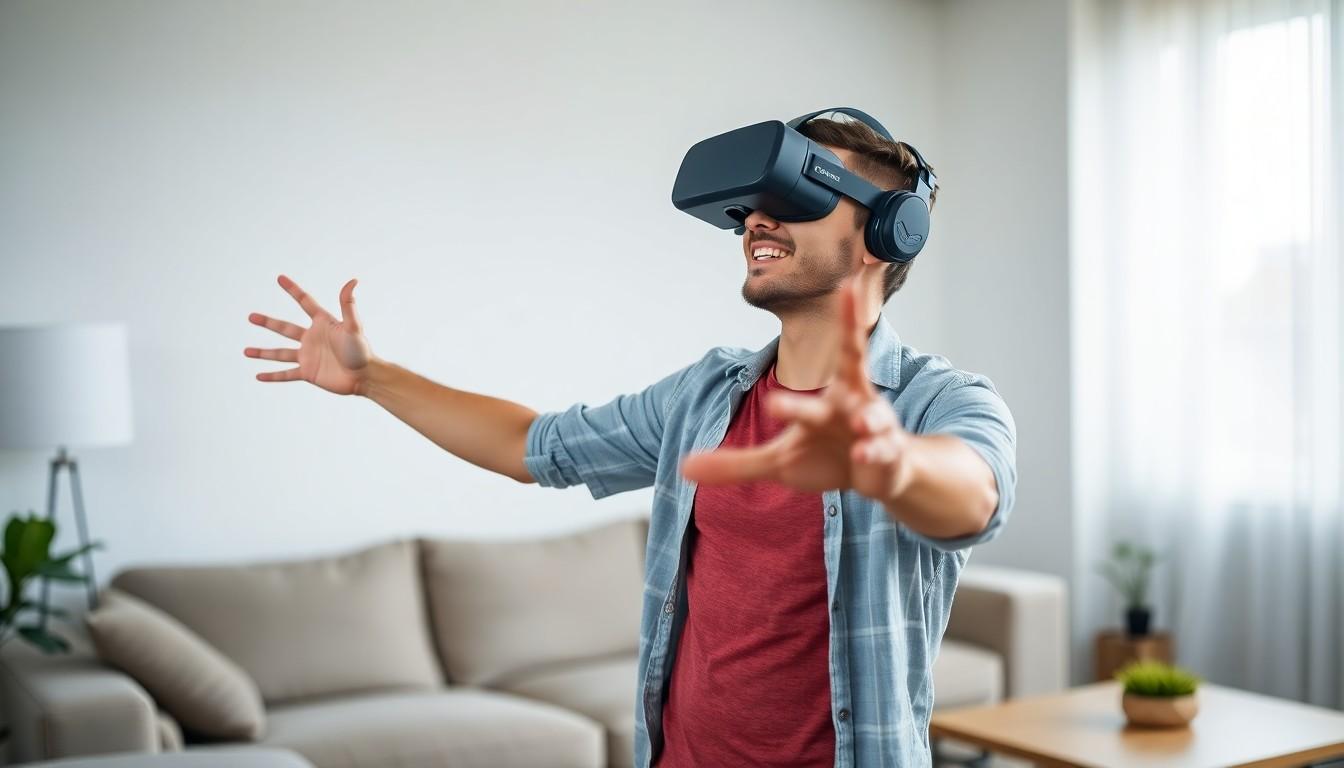
In a world where reality often feels a bit too mundane, virtual and augmented reality swoop in like superheroes, ready to transform the ordinary into the extraordinary. But what’s the secret weapon behind these mind-bending experiences? Enter the specialized mobile devices that make VR and AR not just a dream but a delightful reality.
Table of Contents
ToggleOverview of VR and AR Technologies
Virtual reality (VR) and augmented reality (AR) represent two significant technological advancements in how people interact with digital environments. Specialized mobile devices play a crucial role in delivering these experiences.
Definition of Virtual Reality
Virtual reality immerses users in a wholly digital environment, blocking out the physical world. Users experience realistic simulations that engage multiple senses. Headsets, such as the Oculus Quest and HTC Vive, serve as the primary interface for VR experiences, offering high-resolution graphics and spatial audio. With VR, users can explore virtual worlds, engage in gaming, or participate in training simulations. The interaction feels lifelike, providing users an opportunity to experience scenarios that may not be possible in reality.
Definition of Augmented Reality
Augmented reality enhances the real world by overlaying digital information on top of physical surroundings. Devices such as smartphones and AR glasses enable users to interact with both real and virtual elements simultaneously. Applications in retail allow customers to visualize products in their environment, while mobile games like Pokémon GO encourage exploration of the physical world. AR technology enriches user experiences by adding context to the immediate environment, making information accessible and engaging.
Types of Specialized Mobile Devices
Specialized mobile devices play a crucial role in the functionality of VR and AR technologies. These devices tailor experiences to enhance user engagement and interactivity.
Smartphones with VR and AR Capabilities
Smartphones increasingly support VR and AR functionalities. Many modern smartphones come equipped with powerful processors and high-resolution displays. Devices like the iPhone series and Samsung Galaxy models often feature ARKit and ARCore software development kits. These features enable users to experience augmented environments seamlessly. Popular applications include games such as Pokémon GO, which blend real and virtual elements. Moreover, smartphones can connect with headsets to provide an immersive VR experience. The adaptability of smartphones makes them accessible tools for VR and AR exploration.
Standalone VR Headsets
Standalone VR headsets offer a self-contained experience without the need for external devices. Popular models include the Oculus Quest series and the Pico Neo. Users can enjoy VR experiences without cables or powerful PCs, simplifying the setup process. These headsets feature built-in sensors, providing room-scale tracking for a more dynamic experience. Many also include hand-tracking capabilities, enhancing user interaction with virtual environments. The standalone nature of these devices makes them appealing to casual and hardcore gamers alike. Manufacturers continue to invest in this technology, pushing the boundaries of what standalone VR can achieve.
Key Features of Specialized Mobile Devices
Specialized mobile devices play a crucial role in delivering immersive VR and AR experiences. Their unique features enhance usability, performance, and overall user satisfaction.
Display Quality
Display quality significantly impacts user experience in VR and AR. High-resolution screens provide clear visuals and vibrant colors, essential for realistic interactions. Devices like the Oculus Quest 2 feature over 1832 x 1920 pixel resolution per eye, improving clarity during prolonged use. Refresh rates also matter, with rates of 90Hz or higher leading to smooth visuals, reducing motion blur. Users enjoy enhanced immersion when equipped with OLED technology, which offers deeper blacks and high contrast ratios.
Processing Power
Processing power dictates how smoothly a device runs VR and AR applications. Specialized mobile devices often integrate advanced processors, like the Qualcomm Snapdragon 888. This chip can handle complex rendering tasks essential for immersive experiences. High-performance GPUs further improve graphical fidelity and frame rates, enhancing realism. Devices with substantial RAM, around 6GB or more, allow for efficient multitasking and quick loading times, boosting the overall experience in graphics-intensive applications.
User Interface
A well-designed user interface ensures ease of navigation in VR and AR environments. Intuitive controls and gesture recognition significantly enhance user interaction. Specialized mobile devices often incorporate voice commands, enabling users to issue commands hands-free. Head-tracking technology provides feedback based on user movements, creating a seamless experience. Haptic feedback, present in devices like the Oculus Quest, allows users to feel virtual objects, bridging the gap between virtual and real worlds.
Popular Devices in the Market
Various specialized mobile devices dominate the VR and AR market, each designed to deliver distinct immersive experiences.
Oculus Quest Series
Oculus Quest headsets offer leading-edge VR experiences. Featuring standalone functionality, users enjoy an all-in-one solution without external hardware. The Quest 2 stands out with a resolution of 1832 x 1920 pixels per eye and a 90Hz refresh rate. Built-in sensors enable room-scale tracking, allowing for interactive movements in virtual environments. Hand-tracking capabilities enhance interactions, making these headsets appealing for games and experiences alike. The Oculus ecosystem supports a wide array of applications, contributing to its popularity.
Microsoft HoloLens
Microsoft HoloLens represents advanced mixed reality technology. Users experience AR through holograms superimposed onto their real-world surroundings. This device integrates advanced spatial mapping, enabling interactions with both digital and physical elements. With a resolution of 2,320 x 1,320 pixels per eye, it provides clear visuals for complex applications. The HoloLens targets professional sectors such as healthcare and engineering, enhancing workflows and training with immersive tutorials. Additionally, its hands-free design ensures seamless integration into various environments.
Samsung Galaxy Series
Samsung Galaxy devices support AR experiences through powerful mobile capabilities. Equipped with high-resolution displays and advanced processors, these smartphones run AR applications smoothly. Samsung’s ARCore integration allows users to access features like real-time object recognition and environmental mapping. Popular applications, including Samsung’s AR Zone, enable creative experiences, blending virtual elements with everyday activities. The Galaxy series’ extensive compatibility makes it a favored choice for users immersed in augmented reality.
The landscape of virtual and augmented reality continues to evolve with specialized mobile devices leading the charge. These devices not only enhance user experiences but also broaden the appeal of VR and AR technologies. With advancements in display quality processing power and user interfaces users can now immerse themselves in lifelike simulations and interactive environments.
From standalone headsets like the Oculus Quest to smartphones equipped with cutting-edge features these tools are redefining how individuals engage with digital content. As the technology matures the potential applications in various sectors will likely expand making VR and AR an integral part of everyday life.


